Video Transcript
For embroidering with M.E., there are some considerations worth keeping in mind.
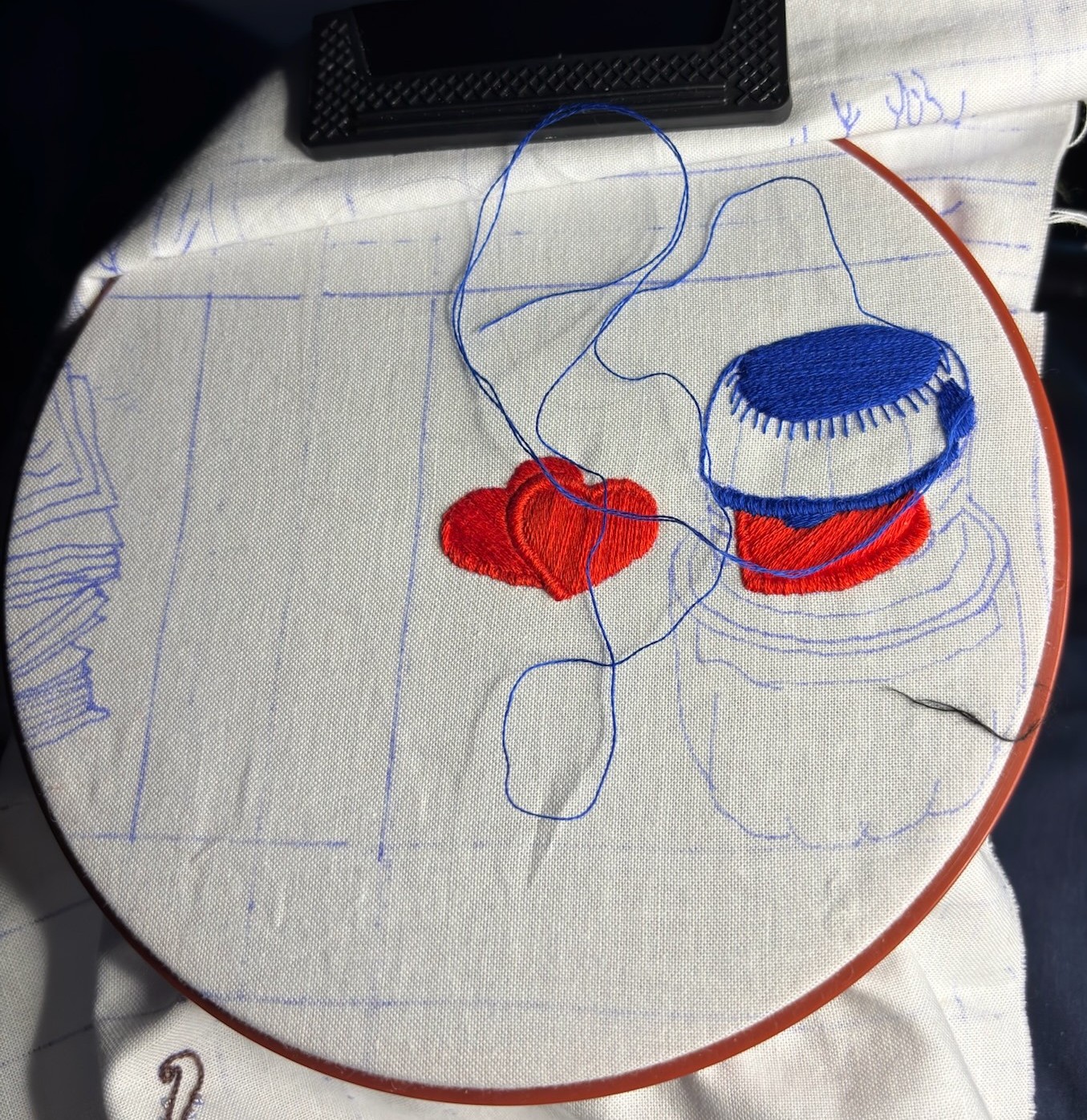
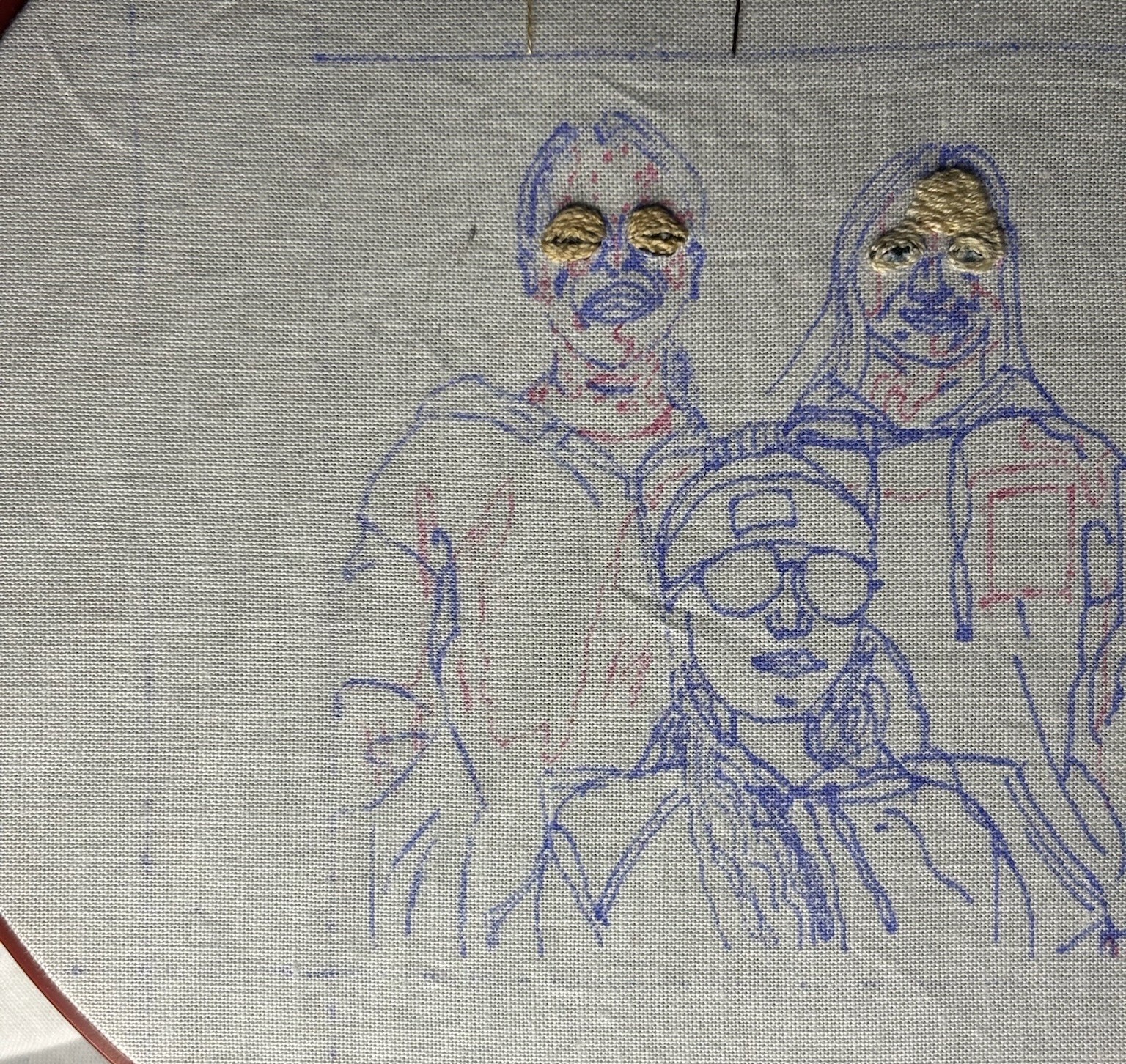
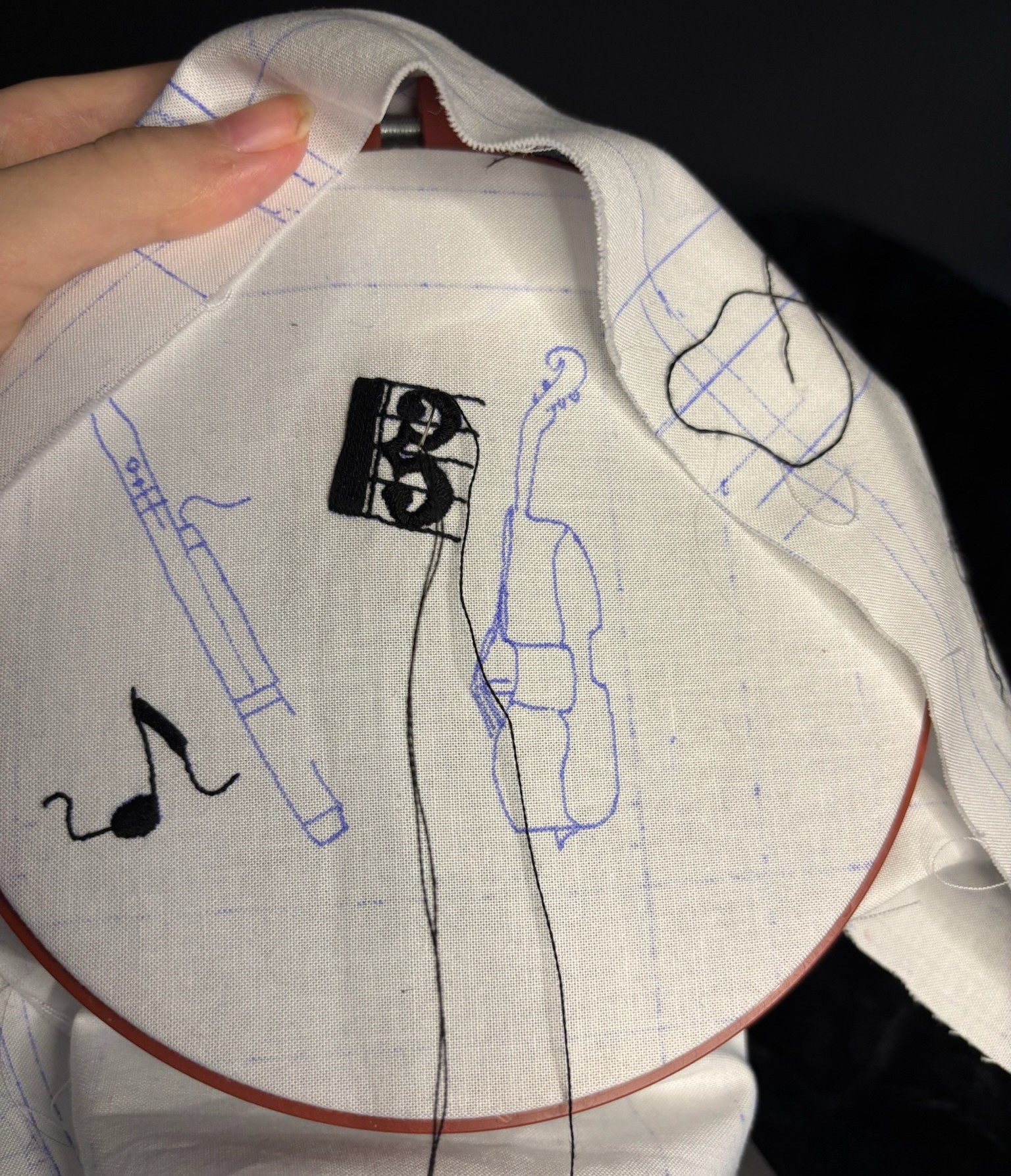
Here's how I embroider. First, I transfer my design using a heat soluble pen and a light source such as a tablet.
The back stays neat, but I start with knots and don't worry about little tangles or travels.
The batting hides some of this. When I'm ready to start, I use a timer and heart rate alarms.
Pacing well for your health is much more important than any project.
Using pillows and props, I find a comfortable and ergonomic position.
This is now much easier with an adjustable bed frame.
Attatched to this, I have a hoop stand and task lighting with magnification.
For me, this is easier than disperse lighting for light sensitivity.
Most days I embroider like this. I find it's the most energy-effective and precise method, though it requires a more upright position.
Using less tools and a more reclined posture, one could also hold the hoop in one hand and stitch with the other. Here I demonstrate stab stitching, which requires more movement and energy than two-handed stitching, but is essentially the same movement.
Alternatively, one could loosen the tension in their hoop and sew stitch.
Theoretically, this is more movement efficient as the sewing hand remains above the hoop. So, it should save you energy, but I'm not very practiced and find it quite difficult.
On worse days orthostatically, when I still feel able to embroider, I do so lying down.
One could use any of the previously demonstrated embroidery techniques, though it's much more difficult in a reclined position. I find it easiest to do a simple running stitch by manipulating the fabric with my left hand and the needle with my right.
If I want a solid line, I simply rotate the fabric and repeat the motion in between my stitches, creating a double running stitch.
I'd love to hear what enables you to embroider with M.E. Happy stitching.